
How To Identify Electrical Hazards in a Flood Zone
Reviewed by Penny Electric - licensed NV C-2 electrical contractor (#74758)
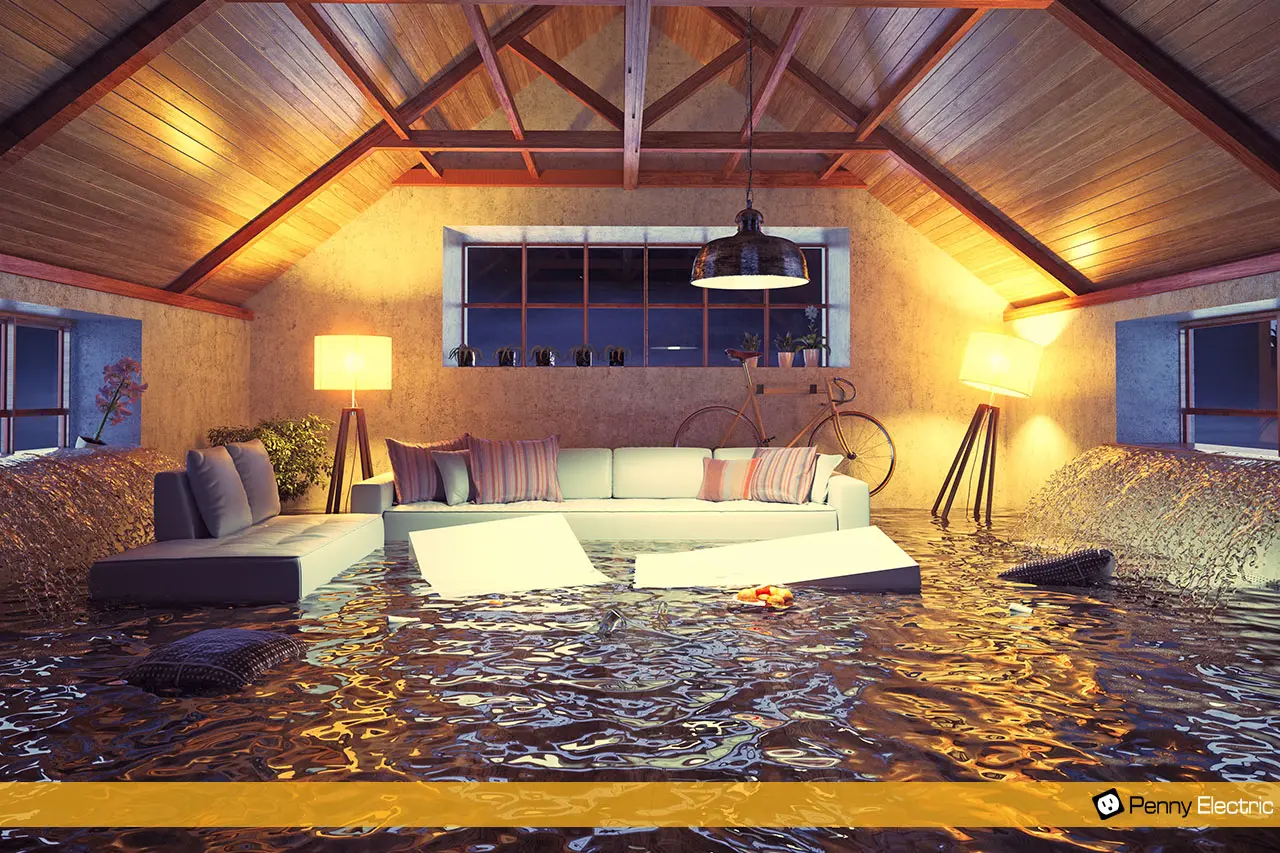
The recent devastating flooding in Houston following Hurricane Harvey has brought awareness of the dangers of flooding to the forefront of public consciousness. If you live in a flood zone, you should be aware of the electrical hazards that arise when your home and property flood.
Wading through waist-deep -- or even knee-deep -- flood water can be hazardous from many angles, including from an electrical one. Just days ago, a young man trying to rescue his sister's cat from her flooded home resulted in his being killed by electrocution when his foot touched a live wire that was hidden under the flood waters. His sad fate should be a lesson to any and all who live in a flood zone or who find themselves caught in an unexpected flooding situation even where flooding would not normally be expected to occur. Here's what you need to know ...
Hidden Dangers
Once a flood occurs, people are understandably in a hurry to get back to their homes to survey the damage and see what -- if anything -- can be salvaged. But you need to know that even when power is off, you're still in danger of being electrocuted by wires and appliances that are submerged. Sometimes, you'll see sparks or hear buzzing, but not always. The truth is, that removing the meter from the socket is the only way the house can be completely disconnected from the grid, and this is a task that should only be performed by a licensed (and insured) electrician! After the waters subside, you can be pretty confident that anything electrical that was submerged -- even for a brief period of time -- is permanently ruined. Here's a list of the numerous electrical components you'll more than likely have to replace ...
- all Romex (plastic-sheathed) wiring
- BX (armored) cable
- your home's electrical panel and circuit breakers (or fuse box and fuses)
- sub panels
- switched disconnect boxes
- electrical switches and outlets
- electric motors
- circuit boards
- non-submersible pumps
- fans
- air conditioners
- space heaters
- boilers and furnaces
- enough food, drinking water, and cash to get you and your family through a few days
- your homeowner's insurance policy numbers and the phone number of your insurance agent
- a few days' worth of clothing
- some basic toiletries such as toothpaste and toothbrushes, a comb or hairbrush, travel sized shampoo and deodorant, and a couple of towels.
- one or more bottles containing a few of each of any medications you or your family take on a daily basis