
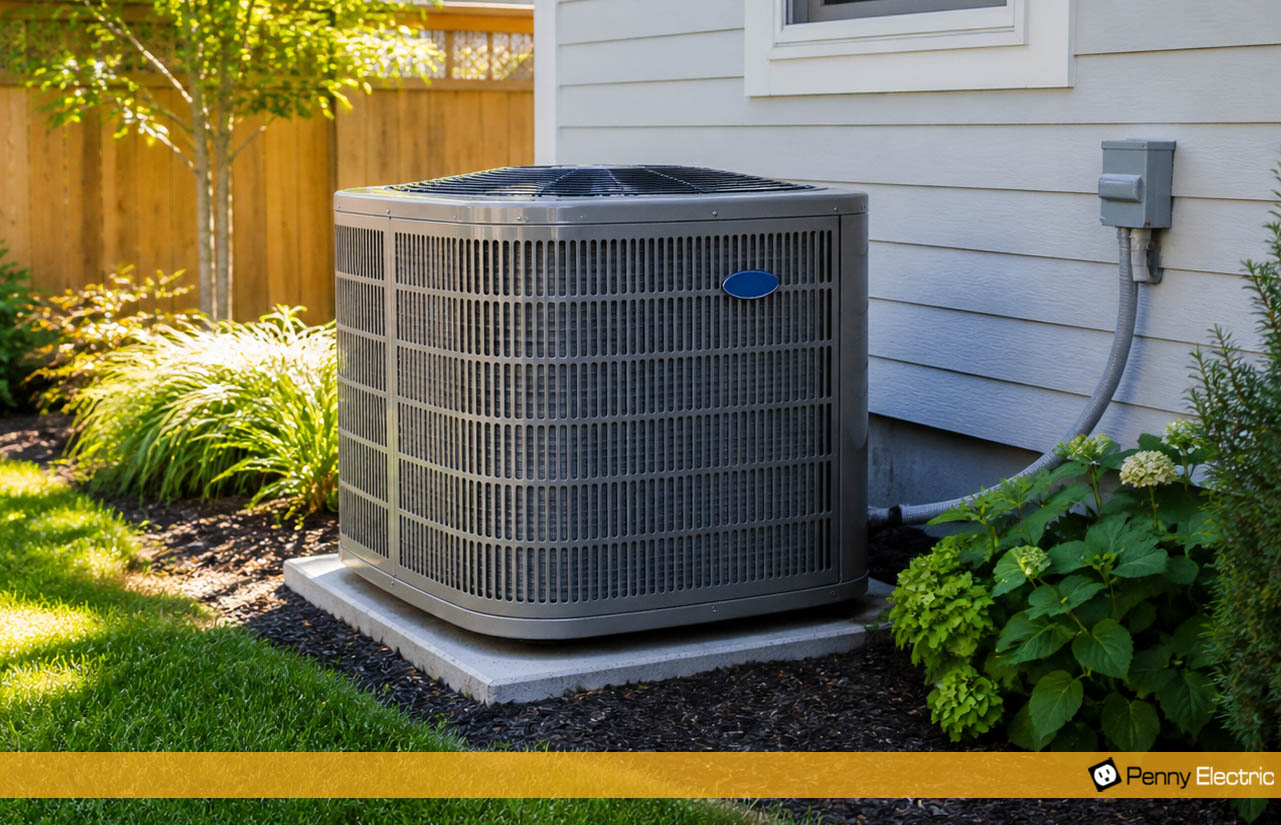
When your air conditioner kicks on in the Las Vegas heat, the last thing you want is a tripped breaker and a home that won’t stay cool. If your breaker trips when the Air Condtioner turns on, it’s more than just an inconvenience—it’s often a warning sign that something in your electrical system needs attention. Understanding the common causes can help you prevent bigger issues and keep your system running safely and efficiently.
High Compressor Startup Loads
Air conditioners require a surge of power when they first start up. This is known as the startup load, and it’s especially high for the compressor—the component responsible for circulating refrigerant. In extreme heat, like what we experience in Las Vegas and Henderson, your Air Conditioner may cycle more frequently, putting repeated stress on the electrical system.
If the startup load exceeds what your circuit can handle, the breaker will trip to protect the system. This can happen even if everything else appears to be working normally. Over time, repeated high startup demands can also wear down electrical components, increasing the likelihood of ongoing issues.
Weak or Failing Breakers
Not all breaker trips are caused by excessive load. In many cases, the breaker itself may be the problem. Breakers are designed to trip when they detect unsafe conditions, but they can weaken over time due to age, heat exposure, and repeated use.
A weak breaker may trip more easily than it should, even under normal operating conditions. If your Air Conditioner system hasn’t changed but the breaker suddenly starts tripping, it’s worth having a licensed electrician evaluate whether the breaker needs replacement.
Undersized Circuits
Air conditioning systems require properly sized circuits to operate safely. If your AC unit was installed on an undersized circuit—or if upgrades were made without updating the electrical system—it can lead to frequent breaker trips.
Undersized wiring and breakers struggle to handle the electrical demand, especially during peak summer temperatures when systems run longer and harder. This is a common issue in older homes or properties where additions and upgrades were made without a full electrical assessment.
Aging Electrical Panels
Many Las Vegas homes, particularly those built decades ago, still rely on older electrical panels that weren’t designed for today’s energy demands. Modern air conditioning systems, along with other appliances, can push these panels beyond their intended capacity.
An aging panel may not distribute power efficiently, leading to overheating, inconsistent performance, and frequent breaker trips. In some cases, older panels may also pose safety risks, making an upgrade not just a convenience but a necessity.
Heat-Related Electrical Strain
Extreme desert heat doesn’t just affect your AC—it impacts your entire electrical system. High outdoor temperatures can raise the internal temperature of electrical panels, wiring, and breakers, reducing their efficiency and increasing resistance.
As components heat up, they become more prone to tripping under load. This is why breaker issues often appear or worsen during the hottest months of the year. Proper ventilation, updated equipment, and correctly sized systems all play a role in minimizing heat-related strain.
When to Call a Professional
If your breaker trips when the Air Conditioner turns on, it’s important not to ignore the issue or simply reset the breaker repeatedly. While it may seem like a quick fix, frequent tripping can signal deeper electrical problems that could lead to equipment damage or safety hazards.
A licensed electrician can evaluate your system, check for undersized circuits, test breaker performance, and assess whether your panel is equipped to handle your home’s electrical load. In many cases, solutions may include replacing a faulty breaker, upgrading wiring, or installing a new panel to support your AC system properly.
In the Las Vegas heat, a reliable air conditioning system isn’t optional—it’s essential. Addressing breaker issues early helps ensure your home stays comfortable, safe, and energy-efficient all summer long.


