
Why Every Home Needs a Bathroom Exhaust Fan
Reviewed by Penny Electric - licensed NV C-2 electrical contractor (#74758)
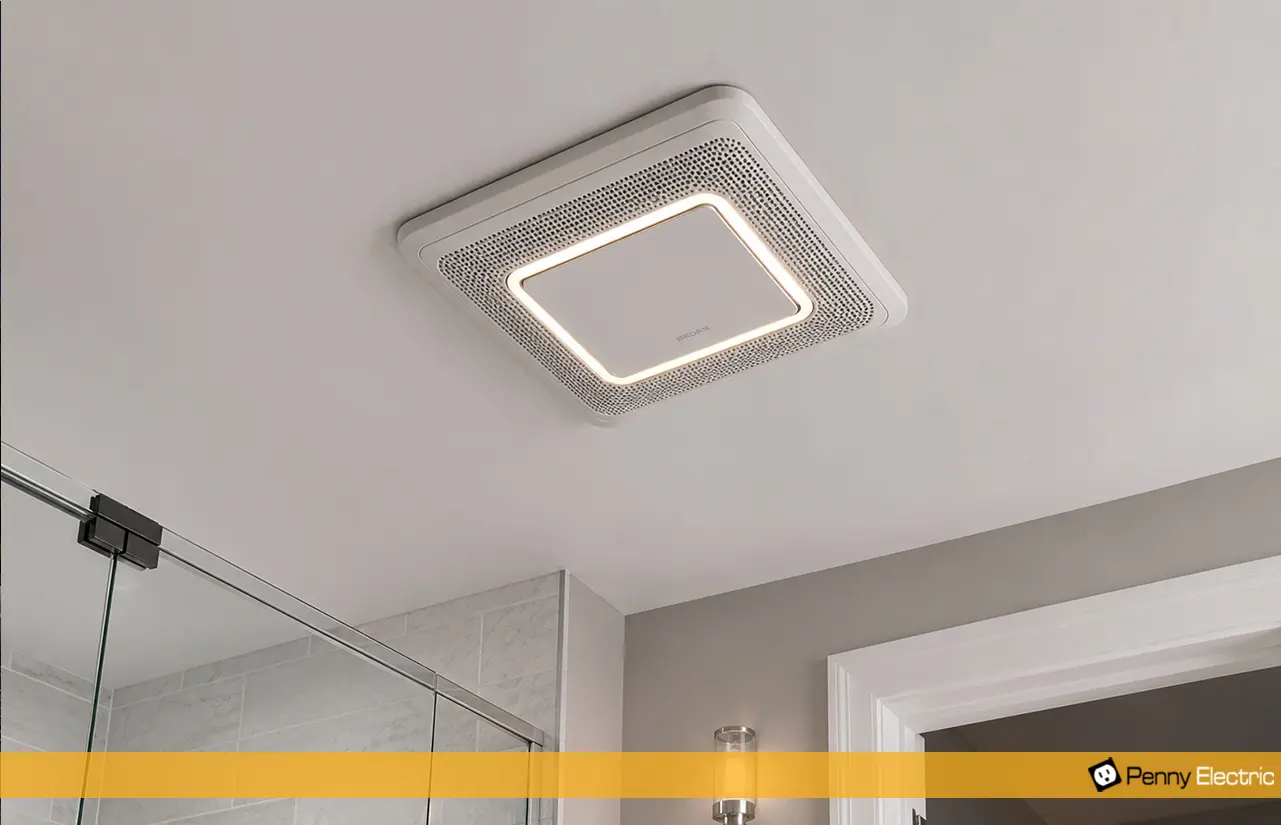
A bathroom exhaust fan is one of the smallest upgrades in your home, and one of the most important. ...And not for the reason you might imagine! Plenty of Las Vegas homes - especially older ones - still have bathrooms with no fan at all, or one that hasn't worked in years. If you're relying on an open window or your air conditioning to handle bathroom moisture, here's why that isn't enough, and why a properly installed fan is worth the call.
Moisture Is the Real Problem
Every hot shower releases a surprising amount of water vapor into the air. In a small, enclosed bathroom, humidity can spike fast. That moisture settles on walls, ceilings, mirrors, and inside drywall - and it doesn't just disappear when the shower stops. Over time it leads to peeling paint, warped trim, rust on fixtures, and mold or mildew growth. People assume our dry desert climate protects them, but a closed bathroom holds humidity regardless of what's happening outside. The fan's job is simple: pull that damp air out of the room and vent it outside before it can cause damage.
Why Your Air Conditioner Can't Handle It
This is where homeowners get tripped up. It's tempting to think a strong HVAC system will pull the humidity out for you. It won't - at least not where it matters.
Your AC removes some moisture from the air as it cools, but it does this for the whole house, not the bathroom specifically. Most bathrooms don't even have their own return vent, so the humid air just sits there instead of being drawn back to the system. By the time it eventually mixes into the rest of the house, it has already been soaking into your bathroom surfaces.
There's a second issue. Running an exhaust fan pulls air out of the home, which can create slight negative pressure. In a tightly built house, that can pull against your HVAC system and even draw unconditioned air in through gaps. A good installation accounts for this - sizing the fan correctly for the room and making sure it moves enough air without fighting your heating and cooling. The takeaway: your AC and your bathroom fan do two different jobs. One conditions the whole home; the other removes moisture at the source.
Where the Air Actually Goes Matters
One of the most common mistakes we find is a fan that vents straight into the attic. That doesn't solve the problem - it just relocates the moisture to a space where it causes hidden damage and mold. A correct installation ducts the fan all the way to the exterior of the home. In Las Vegas attics that reach brutal summer temperatures, proper ducting and insulation on that run prevents condensation problems too. In many cases, proper ducting may require the involvement of an HVAC specialist!
The Electrical Side of Installation
Because bathrooms mix water and electricity, fan installation isn't a job to hand to a handyman. A licensed electrician makes sure the fan is on properly protected wiring, correctly grounded, and switched the way you want it. We often recommend a humidity-sensing switch or a timer switch so the fan runs long enough to clear the air after a shower without being left on all day. Adding or relocating a fan may also mean running a new circuit or updating older wiring that isn't up to today's code.
Bottom Line
Every bathroom should have a working, properly vented exhaust fan - not as a luxury, but as protection for your home's structure, air quality, and value. If your bathroom has no fan, an old noisy one, or one that is not installed properly, Penny Electric can install it right.
Call Penny Electric today to schedule your bathroom exhaust fan installation.